Replace Worn Surfaces With Durable Materials
Flooring Installation in Lansdale for homes and businesses facing damage, wear, or outdated finishes
Taylored For You Construction, LLC provides flooring installation in Lansdale for homeowners and business owners dealing with scratched hardwood, cracked tile, or stained carpet that no longer serves its purpose. You may notice boards that creak underfoot, grout lines that have darkened despite cleaning, or seams that lift at transitions. New flooring restores the look of a room and holds up to the foot traffic your space actually sees.
The installation process depends on the material you select and the condition of the subfloor beneath. Crews remove existing flooring, inspect for moisture or structural issues, and level the surface before laying tile, vinyl plank, engineered hardwood, or carpet. Proper underlayment prevents squeaks and provides a stable base. Transitions between rooms are cut precisely so thresholds sit flush and doors clear the new height.
If your floors show visible wear or you are updating a room as part of a larger renovation, contact the team to review material options and timeline requirements.
Material Selection and Subfloor Preparation
Your flooring project begins with measuring each room and checking the subfloor for level and moisture. You will see installers use a straightedge and shims to identify high and low spots, then apply self-leveling compound or sand down uneven areas. Any soft spots indicate water damage that must be repaired before new flooring goes down.
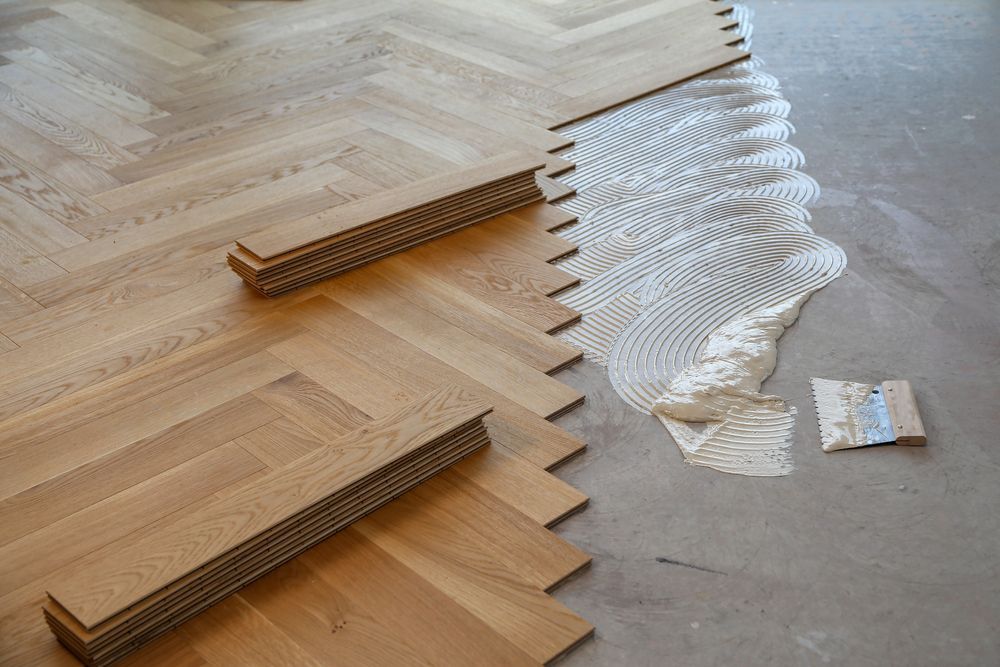
Vinyl plank locks together without adhesive, making it ideal for basements or kitchens where moisture is a concern. Tile requires thinset mortar spread with a notched trowel, and each piece is set level using spacers. Hardwood or engineered planks are nailed or glued depending on the subfloor type. After installation, you will notice consistent gaps at walls for expansion and clean cuts around doorways and vents. Taylored For You Construction, LLC ensures each plank aligns and each grout line stays uniform.
Baseboards and quarter-round trim are reinstalled or replaced to cover expansion gaps. Thresholds are screwed down at transitions between flooring types. The crew cleans adhesive residue and vacuums dust before handing over the space. You are left with a floor that sits flat, looks consistent, and handles daily use without shifting.
Common Questions About Flooring Installation
Property owners often ask about subfloor prep, material durability, and how different products hold up in high-traffic areas.
What is the subfloor and why does it matter?
The subfloor is the structural layer beneath your finished floor, usually plywood or concrete, and it must be dry, level, and solid or your new flooring will crack, squeak, or shift over time.
How do I choose between vinyl plank and tile?
Vinyl plank installs faster, feels warmer underfoot, and handles minor subfloor movement better, while tile offers more design options and works well in wet areas like bathrooms.
When should I replace the underlayment?
You should replace it if the existing layer is compressed, water-stained, or incompatible with your new flooring type, since poor underlayment causes noise and uneven wear.
Why do expansion gaps matter?
Flooring materials expand and contract with temperature and humidity changes, so gaps at walls and transitions prevent buckling or cracking as the material moves.
What flooring works best in Lansdale homes with basements?
Vinyl plank and tile resist moisture better than hardwood, making them safer choices in below-grade spaces where humidity can damage organic materials.
Taylored For You Construction, LLC coordinates flooring installation as a standalone project or as part of a larger remodel, ensuring each material is installed to manufacturer specifications. Reach out to schedule an assessment and review samples that match your budget and use requirements.